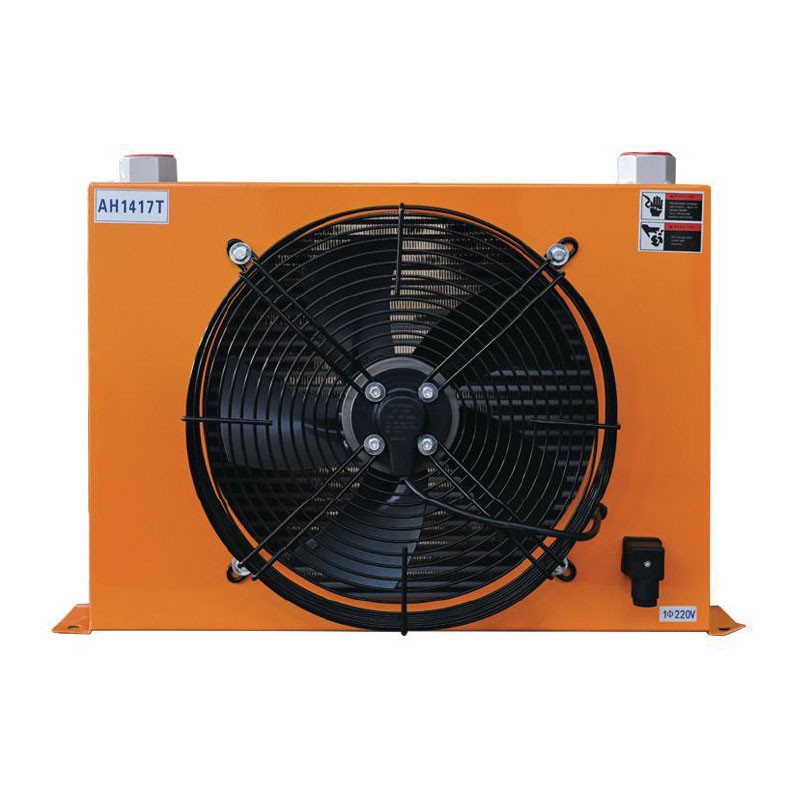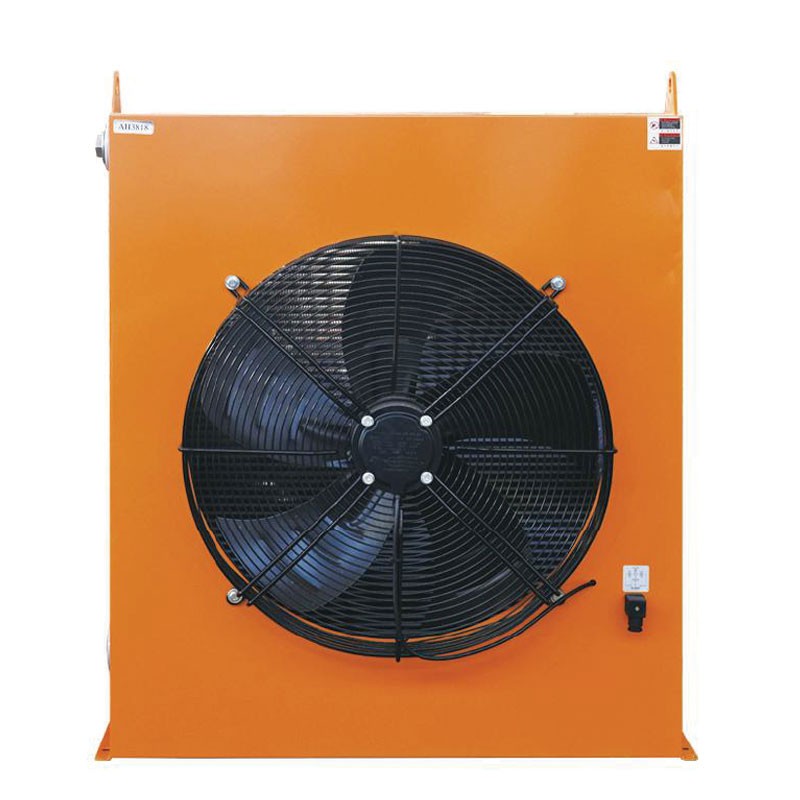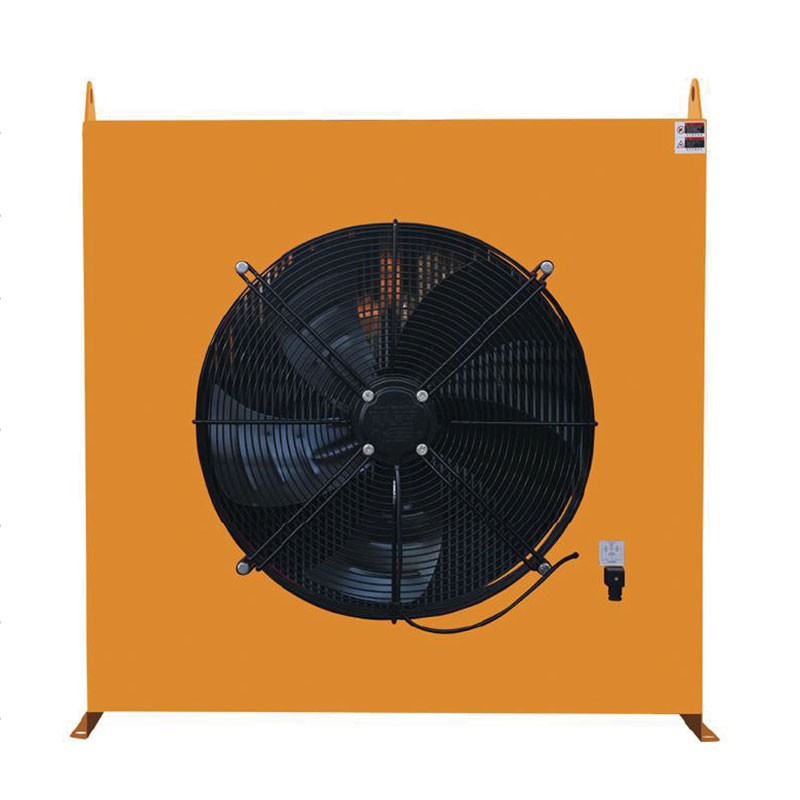
During the operation of the hydraulic system, excessively high oil temperature is the core issue affecting the stability, lifespan, and operational efficiency of the equipment. The hydraulic oil air-cooling cooler, as the core heat dissipation device for the hydraulic system, is widely used in various industrial scenarios such as construction machinery, general machinery, automation equipment, and hydraulic pump stations. It can continuously perform forced air cooling on the high-temperature hydraulic oil, ensuring that the hydraulic system always operates stably within the standard temperature range. It is an indispensable accessory for hydraulic equipment.
During the operation of the hydraulic system, pressure conversion, mechanical friction, throttling speed regulation and other conditions continuously generate heat, causing the oil temperature to rise rapidly. When the oil temperature exceeds 60℃, the viscosity of the hydraulic oil will significantly decrease, the lubrication performance will fail, and the wear of precision components such as hydraulic pumps, electromagnetic valves, and oil cylinders will be exacerbated. At the same time, the oil will accelerate oxidation and deterioration, generating sludge and gums, blocking oil paths and filters, which not only reduces the operational accuracy of the equipment but also significantly increases the probability of equipment failure and maintenance costs. The core function of the hydraulic oil air-cooling cooler is to continuously remove the residual heat of the system and stabilize the oil temperature within the optimal working range of 30-55℃.
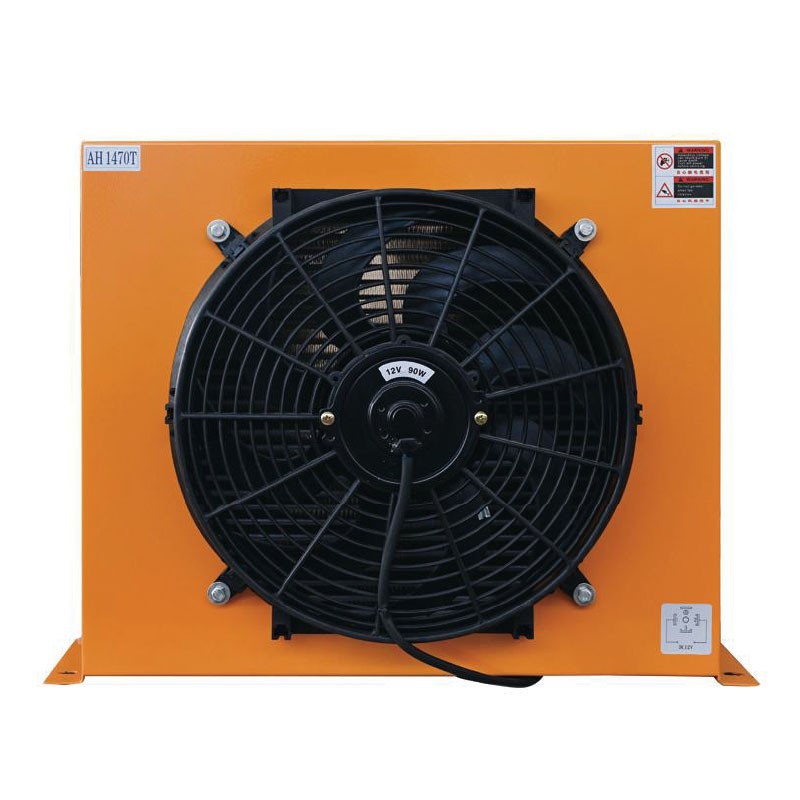
This cooling device adopts the principle of air convection for heat dissipation and does not require an external water source. It breaks away from the site restrictions of water-cooling equipment and is more convenient for installation and use. The core of the equipment consists of efficient heat dissipation fins, thickened heat dissipation oil pipes, high-speed heat dissipation fans, and stable frame. The overall structure is compact, the heat dissipation area is large, and the heat dissipation efficiency is high. The heat dissipation pipeline uses seamless precision pipes, which have strong pressure resistance and can be adapted to high and low pressure hydraulic systems. They are less likely to leak or deform; the fins are made by stamping process, arranged evenly, with low wind resistance, and can maximize the adhesion to the airflow to quickly remove the heat from the oil in the pipeline.
In terms of operational advantages, the hydraulic oil air-cooling cooler has low energy consumption, low noise, and simple maintenance, and is suitable for 24-hour continuous operation. The equipment is equipped with a waterproof and dustproof fan, with a high protection level, which can adapt to complex industrial environments such as outdoor, dust-filled workshops, and humid conditions. It is resistant to aging and corrosion, and has a longer service life. Compared with traditional heat dissipation methods, its heat dissipation effect is stable, without problems such as water temperature fluctuations or clogging by scale, and eliminates the need for complex daily maintenance. Only regular cleaning of the fin surface dust is required to maintain efficient heat dissipation.
Currently, the hydraulic oil air-cooling cooler has been fully adapted to scenarios such as injection molding machinery, machine tools, mining machinery, conveying equipment, and general hydraulic systems, effectively solving problems such as excessively high oil temperature, insufficient power, frequent tripping, and component damage, significantly improving the stability of hydraulic equipment, extending the service life of hydraulic oil and equipment components, providing reliable temperature control guarantees for industrial automation production and engineering operations, and is the core accessory equipment for energy-saving and stable operation of industrial hydraulic systems.
This paper addresses:https://www.lianshengcooler.com/technical/1104.html