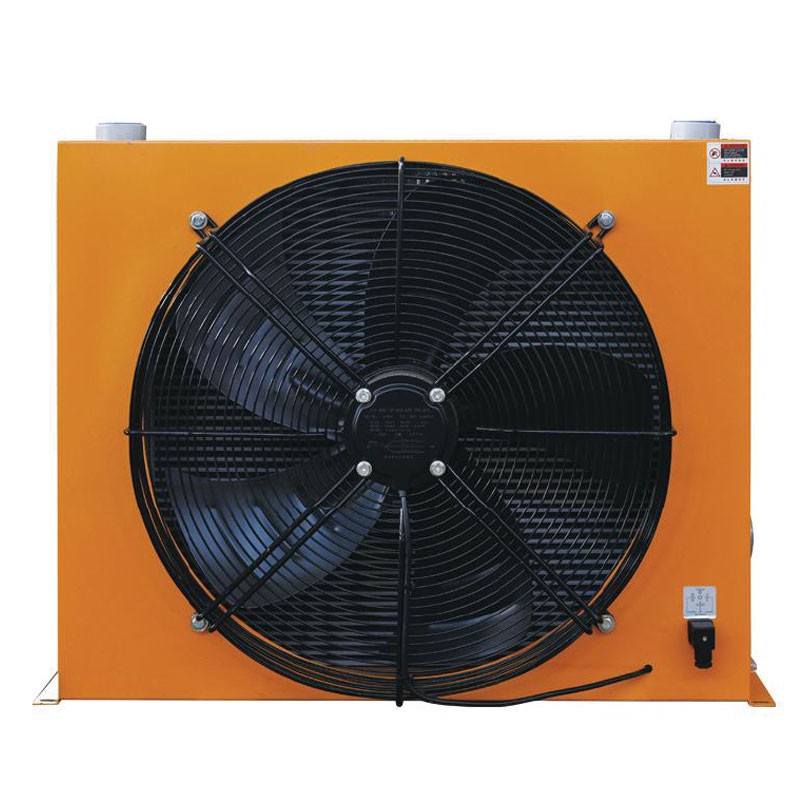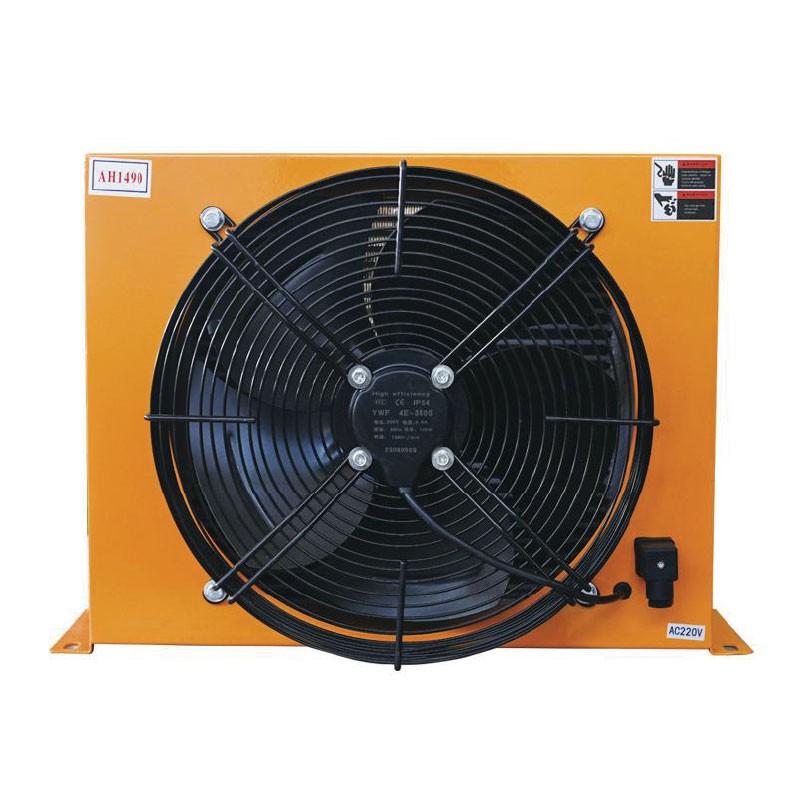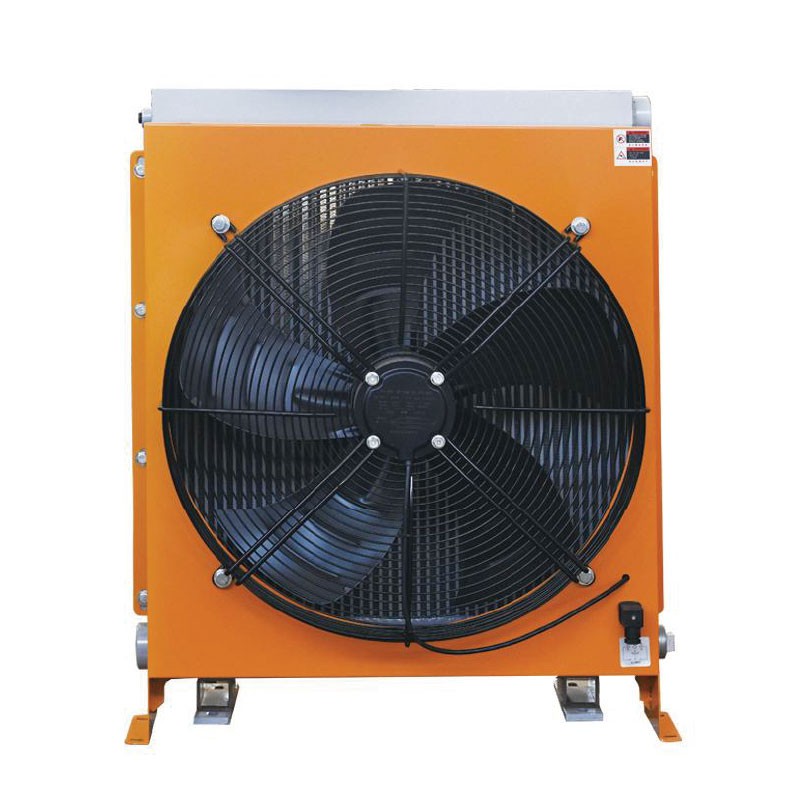
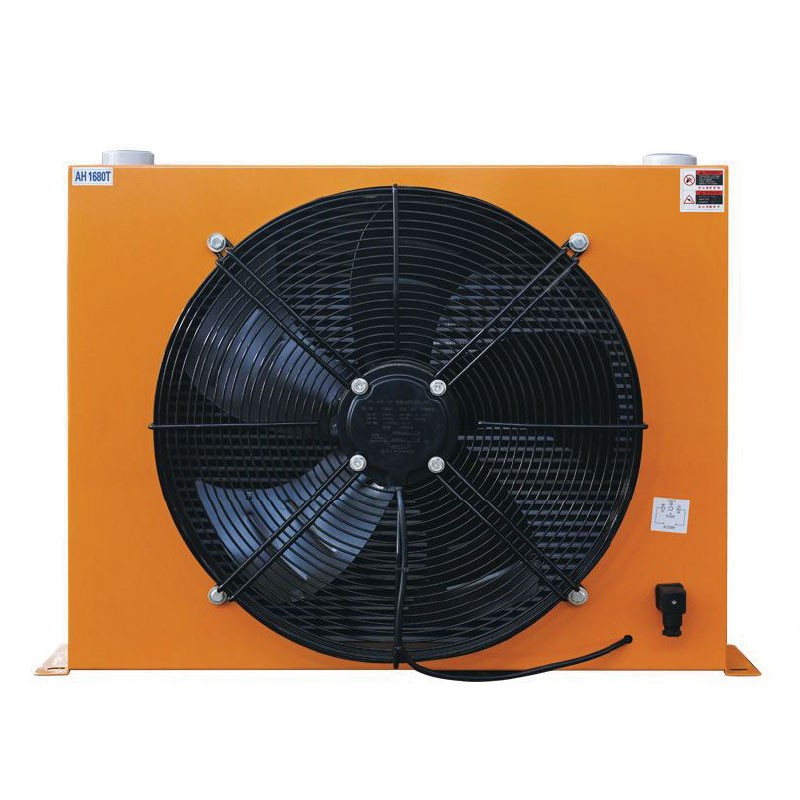
The air-cooled hydraulic oil heat exchanger is a specialized heat exchange equipment in the field of industrial heat exchange. It mainly features the efficient heat exchange between air and hydraulic oil. With the advantages of water-free cooling, high-efficiency heat exchange, and wide adaptability, it has become the core equipment for recovering residual heat and regulating oil temperature in various hydraulic systems. It is widely used in industries such as industrial manufacturing, construction machinery, metallurgy, and chemical engineering, solving the industry pain points of traditional water-cooled heat exchangers that rely on water sources, prone to scaling, and have installation limitations.
The heat exchanger is the key core for temperature control in hydraulic systems. The air-cooled structure is different from water-cooled heat exchangers, using ambient air as the cooling medium and achieving rapid cooling of hydraulic oil through forced convection heat exchange. The high-temperature hydraulic oil generated during the operation of the hydraulic system enters the internal pipeline of the heat exchanger, transfers heat through the pipe wall to the external heat dissipation fins, and together with the high-speed air supply of the axial flow fan, quickly dissipates the heat on the fin surface to the air, completing the heat exchange cycle and continuously reducing the hydraulic oil temperature, achieving constant temperature operation of the system.
This equipment adopts an optimized heat exchange structure design. The internal oil circuit adopts a multi-loop分流 design to extend the oil heat exchange path, allowing the high-temperature hydraulic oil to fully contact the heat dissipation pipe wall, significantly improving the heat exchange efficiency; the external high-density heat dissipation fins are treated with anti-corrosion and passivation, having a large heat exchange area, excellent thermal conductivity, and the ability to resist rust, corrosion, and dust accumulation, suitable for various harsh operating environments. The overall pressure resistance level of the equipment is high, compatible with high-pressure, medium-pressure, and low-pressure hydraulic systems, with excellent oil circuit sealing performance, eliminating oil leakage and cross-contamination problems.
Compared with traditional heat exchange equipment, the core advantages of the air-cooled hydraulic oil heat exchanger lie in the absence of water sources, water circulation systems, and water treatment maintenance, significantly reducing equipment support costs and operational difficulties. The equipment is designed with modular structure, small in size, and flexible in installation, capable of being installed on walls, vertically, or horizontally, suitable for narrow equipment spaces and outdoor open-air operation scenarios. The fan adopts quiet and energy-saving design, stable operation, low failure rate, and supports long-term continuous operation, suitable for industrial high-intensity production needs.
In practical applications, the air-cooled hydraulic oil heat exchanger can precisely control the oil temperature of the hydraulic system, avoiding problems such as oil quality deterioration, sealing component aging, equipment jamming, and accuracy deviation caused by excessively high oil temperatures. At the same time, it can effectively reduce system energy consumption and improve the operational efficiency of hydraulic equipment. The equipment does not require complex supporting facilities, only requires regular cleaning of the heat dissipation surface dust for maintenance, with extremely low maintenance costs and strong stability. It is the preferred equipment for heat exchange and cooling, energy saving, and efficiency improvement in industrial hydraulic systems, and has become the standard supporting device for various medium and large-sized hydraulic equipment.
This paper addresses:https://www.lianshengcooler.com/technical/1105.html